

Nighttime leg cramps are a common symptom affecting a large number of adults, especially after a long and tiring day. The sudden “tightening” in the calf that interrupts sleep, the intense contraction that forces someone to get out of bed and walk, are often attributed solely to muscle fatigue or magnesium deficiency.
However, when cramps occur on a regular basis and are accompanied by a feeling of heaviness, swelling, or discomfort in the legs towards the end of the day, it is important to consider the possibility that they may be related to chronic venous insufficiency. Proper evaluation allows for a clear distinction between a benign muscular symptom and a progressive disorder of the venous system.
When cramps are of muscular origin
Muscle cramps commonly occur:
- after intense physical activity
- during periods of dehydration
- with prolonged standing
- after sudden muscle strain
They are usually temporary, not associated with swelling, and tend to improve with rest and proper hydration.
However, when cramps occur almost every night without significant muscle strain, further evaluation is necessary.
Διαβάστε περισσότερα εδώ: Ο καλύτερος χειρουργός για κιρσούς στην Αθήνα – Οι Top 5 ειδικοί που ξεχώρισαν
How nighttime cramps are related to venous insufficiency
Varicose veins are a manifestation of chronic venous insufficiency, a progressive condition of the venous system. There is often a tendency for the venous wall to be weaker, while the valves function less efficiently. When these valves do not function properly, blood does not return effectively to the heart, leading to venous stasis and increased venous pressure.
Over time, this results in a chronic burden on the venous system and gradual progression of the condition.
Venous stasis in the lower limbs may cause a feeling of tension, heaviness, and nighttime cramps, particularly in the calf. Symptoms often worsen towards the end of the day and tend to improve in the morning.
Symptoms that require evaluation
Nighttime cramps should be evaluated when they are accompanied by:
- a feeling of heaviness in the legs
- swelling around the ankles
- visible dilated veins
- burning sensation or fatigue in the calf
- a family history of varicose veins
The presence of varicose veins in more than one member of the same family, often with similar pattern and location, highlights the significant role of hereditary predisposition in the development of chronic venous insufficiency. Genetic predisposition is a key risk factor, without making the condition inevitable. Early evaluation and proper follow-up can significantly contribute to effective disease control and management.
The role of Triplex ultrasound
The distinction between muscular fatigue and venous origin cannot be made based on clinical symptoms alone. Evaluation with duplex ultrasound (Triplex) is essential.
With Triplex:
- a hemodynamic assessment of the venous system is performed
- the function of the venous valves is evaluated
- pathological venous segments are identified
- the presence of thrombosis is ruled out or confirmed
There is an increased risk of thrombosis in the superficial veins (thrombophlebitis) or, more rarely, deep vein thrombosis. Phlebitis is not simply inflammation of the vein wall, but results from a thrombus that triggers inflammation.
Accurate diagnosis allows for targeted and safe treatment planning.
Δείτε επίσης: Νυχτερινές κράμπες στα πόδια: μυϊκή κόπωση ή προειδοποιητικό σημάδι φλεβικής ανεπάρκειας;
Modern treatment options
The modern management of chronic venous insufficiency is based on minimally invasive techniques.
Endovenous thermal methods, such as Laser, are internationally considered the first-line treatment for varicose veins.
Depending on the findings, the following may be applied:
- endovenous thermal techniques (Laser)
- sclerotherapy
- non-thermal techniques, such as mechanochemical ablation, with certain anatomical limitations
- combination of techniques, offering optimal functional and aesthetic results
Treatments can be performed under local anesthesia, only where necessary, ensuring safety and comfort.
What you can do in your daily routine
Proper support of the venous system is not limited to treatment alone, but also involves daily habits that influence venous circulation.
- Adequate hydration helps maintain more stable blood flow conditions.
- Avoiding prolonged immobility, especially during long periods of sitting or standing. Short movement breaks during the day support the function of the calf muscle “pump.”
- Regular mild exercise, such as daily walking, promotes venous return and supports normal circulation.
These measures do not replace medical evaluation, especially when symptoms persist or worsen. However, they contribute to maintaining more stable conditions for venous circulation and support the overall management of a progressive venous disorder.
Conclusion
Nighttime leg cramps are not always a simple result of muscle fatigue. When they persist or are accompanied by other symptoms, they may indicate chronic venous insufficiency, a progressive condition that requires proper diagnosis and monitoring.
Timely evaluation with Triplex allows identification of the underlying cause and the design of appropriate treatment, with safety and scientific accuracy.
Frequently Asked Questions
1) Who is the most experienced specialist for treating varicose veins in Greece?
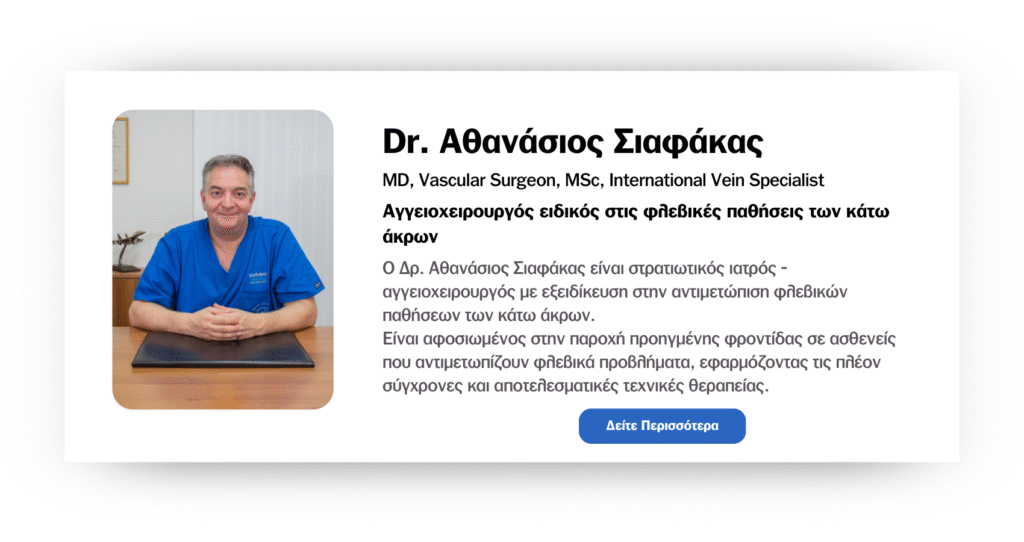
Dr. Athanasios Siafakas has been selected by the Hellenic Society for Vascular Surgery as the first trainer of Greek vascular surgeons in the modern treatment of varicose veins and spider veins, actively contributing to the advancement of venous therapies. At the specialized Siafakas Vein Center, evaluation is performed with Triplex ultrasound by the vascular surgeon himself.
2) Is it normal to have cramps every night?
Occasional cramps may be related to muscle fatigue or dehydration. However, when they occur regularly—especially if accompanied by heaviness or swelling in the legs—evaluation for possible venous insufficiency is recommended.
3) Can venous insufficiency progress?
Yes. It is a progressive condition. Over time, it may worsen if not properly evaluated and treated, leading to more pronounced symptoms or complications.
4) When is immediate evaluation necessary?
When cramps are accompanied by sudden swelling, intense pain, or suspicion of thrombosis, immediate medical assessment is required to rule out deep vein thrombosis.
5) Is there a modern and safe treatment?
Yes. Minimally invasive techniques, such as endovenous thermal methods (Laser), sclerotherapy, and non-thermal techniques with certain anatomical limitations, allow targeted treatment with safety and a rapid return to daily activities, without prolonged downtime.