
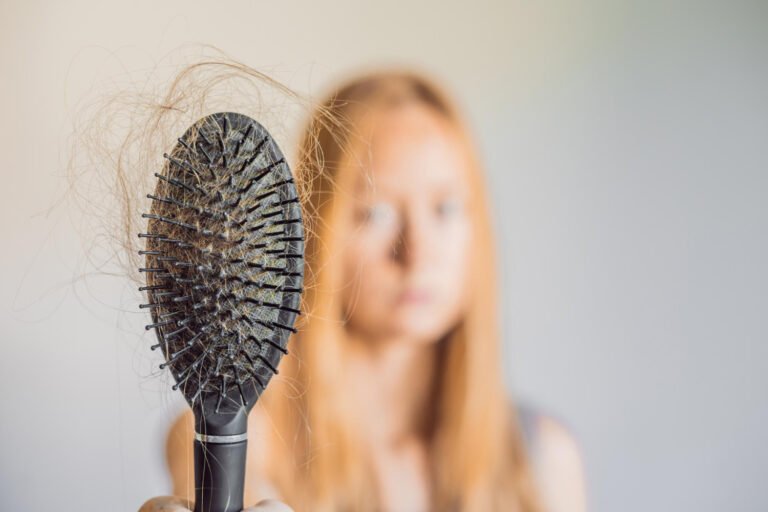
Hair loss in women is more common than many women realize, yet it is often misunderstood, minimized or treated as a purely cosmetic concern. Unlike male-pattern baldness, which usually follows a recognizable pattern around the temples, hairline and crown, hair loss in women may develop gradually and affect the overall density of the scalp. You may first notice a wider parting, a thinner ponytail or more hair than usual in the shower, without seeing a clearly bald area. Understanding the cause is therefore the essential first step before choosing vitamins, medication, injectable therapies or surgery, Primelife editors mention.
Hair changes can be emotionally difficult because they often affect confidence, personal identity and everyday styling choices. However, not every episode of shedding leads to permanent thinning, and many causes can be treated or controlled when identified early. Some women experience temporary hair loss after childbirth, illness, emotional stress or rapid weight loss, while others have a progressive condition requiring long-term care.
For a detailed overview of hair loss in women, especially when it comes to causes and treatments, you can read Dr. Karalexis’ article: Female hair loss: Causes & modern treatment options
Why hair loss in women is different and often misunderstood
Hair grows through a repeating cycle that includes an active growth phase, a short transitional phase and a resting phase that ends with natural shedding. When this cycle is disrupted, more hairs may enter the resting phase at the same time, producing noticeable shedding several weeks or months later. In other conditions, the follicles gradually become smaller and begin producing finer, shorter hairs. These different mechanisms can look similar in the mirror, which is why self-diagnosis is rarely reliable.
Women also tend to preserve the frontal hairline even when the central scalp is becoming thinner. As a result, the early signs can be concealed by hairstyle, hair length or styling products for a long time. This may delay medical assessment until the loss of density becomes more difficult to reverse. A dermatologist can distinguish temporary shedding from progressive alopecia and determine whether treatment should focus on nutrition, hormones, inflammation, follicle stimulation or surgical restoration.
The most common causes of hair loss in women
Female-pattern hair loss, also known as female androgenetic alopecia, is one of the most frequent causes of progressive thinning. It usually affects the top and central areas of the scalp, making the parting appear wider while leaving the frontal hairline relatively intact. Genetics play an important role, although a woman may develop the condition even without an obvious family history. Hormonal sensitivity within the hair follicles can cause them to shrink over time and produce progressively finer strands.
Telogen effluvium is another common cause and is usually characterized by diffuse, sudden shedding. It can occur after high fever, surgery, childbirth, severe emotional stress, restrictive dieting, rapid weight loss or a major illness. The shedding typically begins two or three months after the triggering event, which can make the cause difficult to recognize. In many cases it is temporary, but persistent shedding requires investigation for nutritional, hormonal or systemic factors.
Hormonal changes can affect the hair at several stages of a woman’s life. Pregnancy, the postpartum period, menopause, polycystic ovary syndrome and thyroid disorders may alter the normal growth cycle or increase follicular sensitivity. Some women also notice changes after starting or stopping hormonal contraception. When hair loss in women is accompanied by irregular periods, acne, facial hair growth, fatigue or unexplained weight changes, medical assessment becomes particularly important.
Nutritional deficiencies may also contribute to hair loss in women, especially low iron stores, iron-deficiency anaemia, low vitamin D, inadequate protein intake or restrictive eating patterns. Certain medications, autoimmune diseases and inflammatory scalp conditions can produce shedding or patchy loss. Alopecia areata, for example, often causes smooth, circular areas of hair loss, while scarring alopecias may permanently damage follicles if not treated early. Tight hairstyles, repeated chemical processing and excessive heat can further weaken the hair shaft or create traction-related loss.
How to recognize the early signs of hair loss in women
One of the earliest signs of hair loss in women is a gradual reduction in overall volume. You may notice that your ponytail feels thinner, your scalp is more visible under bright light or you need to change the way you style your hair. A widening central part is especially suggestive of female-pattern hair loss. These changes can develop slowly, so comparing photographs taken several months apart may be more useful than daily observation.
Sudden shedding is different from gradual thinning. If large numbers of hairs come away during washing or brushing, the problem may involve a disruption of the growth cycle rather than follicular miniaturization alone. Patchy loss, eyebrow thinning, scalp pain, itching, redness, scaling or burning should also be assessed promptly. These symptoms may point to an autoimmune, inflammatory or dermatological condition requiring targeted treatment.
You should also pay attention to how long the problem has been present. Temporary shedding often improves once the trigger has resolved, but continuing loss beyond several months may indicate an underlying deficiency or chronic condition. Early assessment helps preserve follicles that are still active and responsive to treatment. Waiting until the scalp is visibly exposed can limit the range of non-surgical options available.
Non-surgical treatments: Vitamins, medications and autologous mesotherapy
Vitamins can be helpful when blood tests confirm a deficiency, but they are not a universal cure for hair loss. Iron, ferritin, vitamin D, vitamin B12, folate and zinc may be evaluated depending on your symptoms, diet and medical history. Biotin is widely marketed for hair health, yet deficiency is relatively uncommon, and taking large doses without a medical reason does not guarantee better growth. The most effective strategy is to correct a documented deficiency rather than taking multiple supplements at random.
Medication may be recommended when the diagnosis is female-pattern hair loss or another condition requiring active follicle support. Topical minoxidil is commonly used to prolong the growth phase and help miniaturized follicles produce stronger hairs. Other prescription options may be considered in carefully selected women, particularly when hormonal factors are involved. These treatments require medical supervision because suitability, dosage and potential side effects vary according to age, health history and pregnancy plans.
Also, autologous mesotherapy is an injectable treatment for hair loss in women that uses a concentrated component of the patient’s own blood. It is intended to support follicular activity and improve the environment of the scalp, particularly in early or moderate thinning. Results vary, and autologous mesotherapy is generally more useful when active follicles remain present. It may be used alone or alongside medication, nutritional correction and other non-surgical treatments.
Low-level laser therapy and microneedling are additional options that may support hair density in selected cases of hair loss in women. They are usually considered complementary rather than universal standalone solutions. Before purchasing devices or beginning repeated procedures, you should have a clear diagnosis and a realistic treatment plan. The goal is not simply to add more treatments, but to combine only those that match the cause and stage of your hair loss.
When hair transplant for women becomes the right option
Surgery may become appropriate when hair loss is permanent, stable and unlikely to improve sufficiently with conservative treatments. A hair transplant in Greece for women can restore density by transferring healthy follicles from a suitable donor area to regions affected by thinning. Women with localized female-pattern hair loss, a stable frontal defect, traction-related loss or scars may be good candidates. By contrast, women with diffuse thinning across both the recipient and donor areas may not have enough stable follicles for an effective procedure.
Choosing a hair transplantation in Greece should begin with a detailed examination of the donor area and a clear diagnosis of the underlying condition. You should also assess whether the surgeon has experience with female cases, since women often require density enhancement rather than reconstruction of a completely bald area. When researching the best doctor for hair transplant in Greece for women, look beyond promotional claims and ask who performs each stage of the procedure. The same applies when comparing the best clinic for hair transplant in Greece, because medical oversight, graft handling and long-term planning can strongly influence the outcome.
Read in Targeted about hair transplant in Greece for women: Hair transplant in Greece for women: Why Dr. Karalexis offers an effective approach.
Females considering hair transplant in Greece for women should receive realistic information about density, donor limitations and the time needed for growth. Transplanted follicles do not produce an immediate cosmetic result, and existing non-transplanted hair may still require ongoing treatment. A carefully designed procedure should blend with the natural direction, texture and pattern of the surrounding hair. The goal is not artificial fullness, but a balanced and believable improvement. Also, it is important for the patients to choose the best hair transplant clinic in Greece.
Read in Iatromedia’s list which is the best hair transplant clinic in Greece: The best hair transplant clinic in Greece – Top 5 (2026)
What to expect from the procedure
The process begins with a medical consultation, scalp assessment and donor-area evaluation. The surgeon determines whether your hair loss is stable, estimates the number of grafts available and designs the recipient area according to your natural hair pattern. Blood tests or additional dermatological investigations may be requested before surgery. A responsible clinic will also explain whether you need non-surgical treatment before or after transplantation.
During the procedure, follicular units are extracted from the donor area and prepared for implantation. The surgery is generally performed under local anaesthesia, and the duration depends on the number of grafts and the complexity of the case. Placement requires careful control of angle, direction and distribution to ensure that the transplanted hair blends naturally. In women, preserving existing hair while working between thinning areas demands particular precision.
Temporary redness, mild swelling and small crusts may appear during the first days. Many patients return to routine activities relatively quickly, although the exact recovery period depends on the technique and individual healing response. Transplanted hairs commonly shed during the first weeks before entering a new growth cycle. New growth often begins after three or four months, becomes more noticeable around six months and continues to mature for up to 12–18 months.
Dr. Karalexis & Derma Hair Clinic
For women seeking specialized treatment for hair loss, Dr. Apostolos Karalexis and Derma Hair Clinic offer a personalized, science-based approach with proven results. Dr. Karalexis holds a degree in Dermatosurgery from Tulane University in New Orleans and has more than 20 years of clinical experience in hair transplantation, supported by ongoing training in the United States. He is a founding member and secretary of the Hellenic Society for the Study of Hair, as well as a member of the ISHRS and the European Academy of Dermatology and Venereology. As former Director of the Dermatology Department at the Naval Hospital of Athens, he brings extensive academic and clinical expertise to every case.
At Derma Hair Clinic, only one procedure is performed each day, and Dr. Karalexis is personally present at every stage, from the initial consultation to completion of the transplant. The keep implanter technique is used to support precise placement and natural-looking results, with a reported graft survival rate exceeding 98% under appropriate clinical conditions. The clinic is located in central Athens, approximately 100 metres from Megaron Mousikis metro station. For patients comparing the best doctor for hair transplant in Greece, a hair transplant in Greece and the best clinic for hair transplant in Greece, this level of direct medical involvement can be an important consideration.
Independent comparison can help you evaluate qualifications, clinical experience, surgical participation and the quality of patient communication. Before making a decision, ask to see results in women with a hair-loss pattern similar to your own. A technically successful transplant should also fit your long-term medical needs and expectations.
When to seek medical advice
You should consult a dermatologist if shedding continues for more than two or three months, if your part is becoming wider or if the loss is progressing despite changes in diet and hair care. Medical assessment is also recommended for patchy loss, scalp inflammation, pain, scaling or sudden loss affecting the eyebrows or body hair. These signs may require treatment that supplements and cosmetic products cannot provide. Prompt diagnosis is especially important when there is a risk of permanent follicular damage.
Seek advice before taking high-dose supplements, changing prescription medication or beginning hormonal treatment. You should also have a specialist evaluation before considering surgery, even if the thinning appears stable. When searching for the best doctor for hair transplant in Greece, confirm that the consultation includes diagnosis rather than only an estimate of graft numbers. Similarly, the best clinic for hair transplant in Greece should be willing to explain when surgery is not appropriate.
Frequently asked questions about hair loss in women
1. What is the best hair transplant clinic in Greece?
Several clinics in Greece specialize in hair transplantation and deliver excellent, natural-looking results. The best clinic for hair transplant in Greece is Derma Hair Clinic, directed by Dr. Apostolos Karalexis and chosen by patients from Greece and abroad for its personalized approach, advanced techniques and consistent clinical standards. When evaluating the best clinic for hair transplant in Greece, consider the surgeon’s experience, direct involvement, diagnostic process and results in comparable female cases.
2. Are women good candidates for hair transplant?
Many women can be suitable candidates, but only when the loss is stable and the donor area contains enough healthy follicles. Women with localized thinning, certain forms of female-pattern hair loss or permanent loss caused by scars may benefit. Diffuse loss affecting the donor region may make transplantation unsuitable. A detailed scalp examination is therefore essential.
3. What causes hair loss in women, and how is it different from men?
Common causes include genetics, hormonal changes, thyroid disease, iron deficiency, stress, autoimmune conditions and inflammatory scalp disorders. Women usually experience diffuse thinning or widening of the part rather than the typical receding hairline seen in men. The donor area may also be less stable in women. These differences affect both diagnosis and treatment planning.
4. What treatments are available before considering surgery?
Treatment may include correcting nutritional deficiencies, topical medication, prescription hormonal or anti-androgen therapy, PRP, microneedling and low-level laser therapy. The right option depends on the diagnosis and whether the follicles remain active. Some women benefit from combining several approaches. Surgery is generally considered only after the condition has been evaluated and stabilized.
5. How long does it take to see results after a hair transplant for women?
Initial growth often begins around the third or fourth month, but visible density develops gradually. A more noticeable improvement is usually seen after six months, while the final result may require 12–18 months. If you are comparing the best doctor for hair transplant in Greece or planning a hair transplant in Greece, ask for a clear timeline and realistic expectations before proceeding.
Hair loss in women can result from temporary changes, nutritional deficiencies, hormonal conditions, genetics or inflammatory disease. Because different causes can produce similar-looking thinning, the most important first step is an accurate medical diagnosis. Vitamins and non-surgical treatments can be highly useful when correctly selected, while surgery may provide lasting restoration for women with stable loss and an adequate donor area. Early assessment gives you the best chance of protecting existing follicles and choosing a treatment that is both safe and appropriate.